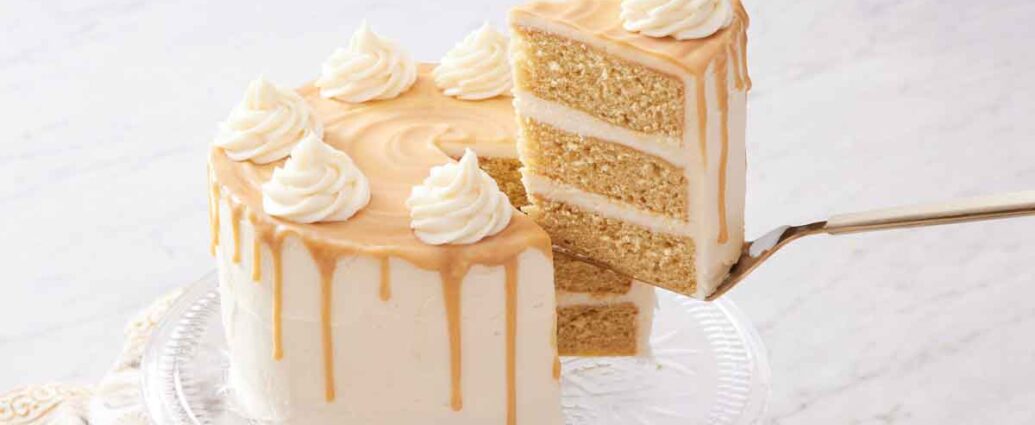
True, old-school butterscotch is made of dark brown sugar and high-fat butter cooked together until they melt into a deeply caramelized, slightly smoky, deeply comforting magic.
When you translate that flavor profile into a cake, something incredible happens. It stops being just “sweet” and becomes complex, deeply aromatic, and incredibly moist.
And yes, you can make a spectacular version of this at home -completely from scratch- without needing a pastry chef’s degree or an afternoon of chaotic kitchen scrubbing.
I’ve baked my fair share of elaborate desserts in professional kitchens, but at the end of the day, a classic, perfectly executed layer cake wins every single time. It brings that high-end bakery vibe straight to your dining room table, but with a rustic, homemade soul.
| Prep Time | 30 minutes |
| Cook Time | 30 minutes |
| Servings | 12 people |
| Course | Dessert |
| Cuisine | American |
| Calories | 540 kcal |
Ingredients
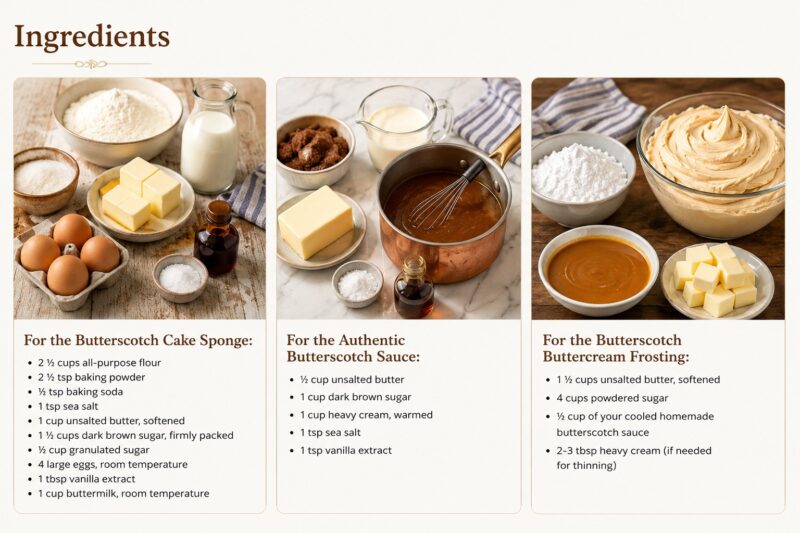
| For the Butterscotch Cake Sponge: |
|---|
| 2 ½ cups all-purpose flour |
| 2 ½ tsp baking powder |
| ½ tsp baking soda |
| 1 tsp sea salt |
| 1 cup unsalted butter, softened |
| 1 ½ cups dark brown sugar, firmly packed |
| ½ cup granulated sugar |
| 4 large eggs, room temperature |
| 1 tbsp vanilla extract |
| 1 cup buttermilk, room temperature |
| For the Authentic Butterscotch Sauce: |
|---|
| ½ cup unsalted butter |
| 1 cup dark brown sugar |
| 1 cup heavy cream, warmed |
| 1 tsp sea salt |
| 1 tsp vanilla extract |
| For the Butterscotch Buttercream Frosting: |
|---|
| 1 ½ cups unsalted butter, softened |
| 4 cups powdered sugar |
| ½ cup of your cooled homemade butterscotch sauce |
| 2-3 tbsp heavy cream (if needed for thinning) |
Equipment
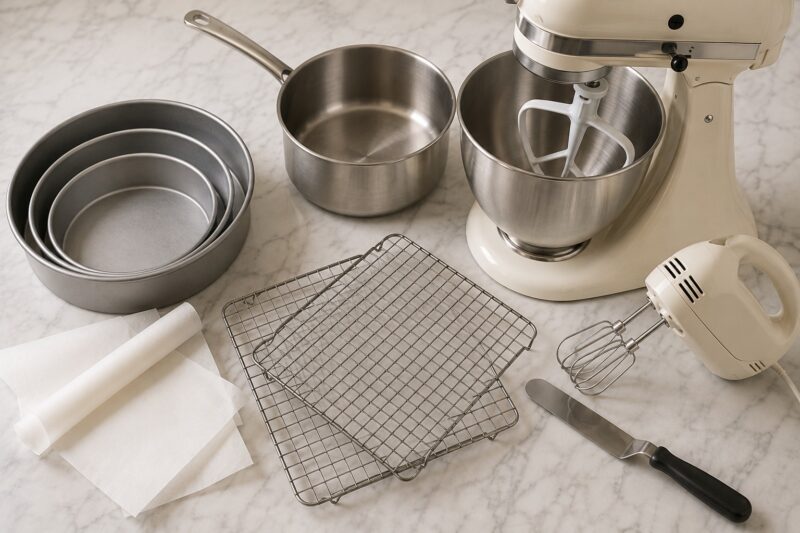
- Three 8-inch round cake pans
- Parchment paper
- Stand mixer fitted with a paddle attachment (or hand mixer)
- Heavy-bottomed saucepan (crucial for sauce control)
- Wire cooling racks
- Offset spatula (for smooth frosting)
Method
1. Bake the Cake Sponge
- Prep the Oven and Pans: Preheat your oven to 350°F (175°C). Grease three 8-inch round cake pans and line the bottoms with parchment paper rounds.
- Whisk the Dry Ingredients: In a medium bowl, vigorously whisk together the flour, baking powder, baking soda, and sea salt. Set aside.
- Cream Butter and Sugars: In your stand mixer, beat the 1 cup of softened butter, dark brown sugar, and granulated sugar on medium-high speed for full 4 to 5 minutes. It should look light, fluffy, and significantly paler than when you started.
- Add Eggs and Vanilla: Add the eggs one at a time, mixing well after each addition to keep the emulsion stable. Mix in the vanilla extract.
- Alternate Dry and Wet: Turn the mixer to low. Add one-third of the dry ingredient mixture, followed by half of the buttermilk. Repeat, ending with the final third of the flour mixture. Mix just until combined—do not overmix, or the cake will turn out dense.
- Bake: Divide the batter evenly among your three prepared pans. Bake for 28 to 32 minutes, or until a toothpick inserted into the center comes out clean or with a few moist crumbs. Let them cool in the pans for 10 minutes, then invert them onto wire racks to cool completely.
2. Craft the Butterscotch Sauce
- Melt Butter and Sugar: In a heavy-bottomed saucepan over medium heat, combine the ½ cup of butter and 1 cup of dark brown sugar. Stir constantly until the butter melts and blends into a thick, bubbly paste with the sugar (about 3 to 5 minutes).
- Stream in Cream: Slowly pour in the warmed heavy cream while whisking constantly. The mixture will vigorously bubble and steam—stay calm and keep whisking.
- Simmer to Thicken: Let the sauce simmer for 4 to 5 minutes without stirring. It will darken and thicken slightly.
- Cool and Finish: Remove from the heat and stir in the sea salt and vanilla extract. Pour it into a glass jar and let it cool completely. It will thicken into a luxurious, pourable glaze as it drops to room temperature.
3. Mix the Frosting & Assemble
- Whip the Butter: Whip the 1 ½ cups of softened butter for 3 minutes until smooth and creamy.
- Add Sugar and Sauce: Gradually add the powdered sugar one cup at a time, mixing on low speed. Once incorporated, pour in the ½ cup of cooled butterscotch sauce. Increase speed to medium-high and whip for another 2 minutes until light and airy.
- Layer and Frost: Place your first cake layer on a stand. Spread a generous layer of buttercream on top, then drizzle a tablespoon of the extra butterscotch sauce over the frosting. Top with the second cake layer and repeat. Place the final layer on top.
- The Final Finish: Frost the top and sides of the cake smoothly with the remaining buttercream. For that classic bakery look, gently pour the remaining room-temperature butterscotch sauce over the top edges of the cake, allowing it to drip down the sides in beautiful, lazy rivers of caramel hue.
Notes
🔥 Pro Tips from Sam’s Kitchen
- Room Temperature is Law: Cold eggs or cold buttermilk will cause your beautifully creamed butter to seize up, splitting your batter and leaving you with a dense cake. Pull them out an hour before baking.
- Watch the Pan: When making the sauce, use a light-colored saucepan if you have one. It lets you monitor the color change easily so you don’t accidentally burn the sugar sugars.
- Level the Tops: If your cake layers dome slightly in the oven, use a serrated knife to gently shave off the tops once they are cold. Flat layers make a sturdy, beautiful cake.
Sourcing and Selecting Your Ingredients
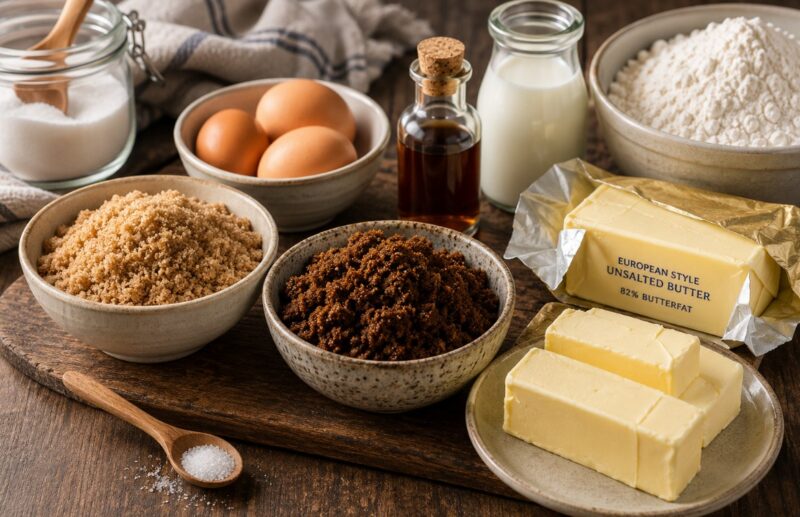
Baking is pure chemistry, meaning every ingredient carries a heavy load. Because this cake relies so deeply on simple, comforting flavors, the quality of what you buy matters.
- The Sugar Choice: Always opt for dark brown sugar rather than light brown sugar here. Dark brown sugar contains a higher concentration of molasses, which provides the deep, underlying, borderline-bitter complexity that authentic butterscotch demands.
- The Butter Factor: Butter is the structural framework of both the sponge and the sauce. Look for a high-quality butter with a high butterfat content (such as European-style butter). It yields a significantly softer crumb and a silkier mouthfeel in your frosting.
Elevating the Flavor
If you really want to take this dessert to the absolute absolute peak of culinary craftsmanship, I highly recommend experimenting with a homemade butterscotch cake recipe with brown butter. Taking the extra few minutes to gently toast your butter on the stovetop before combining it with the brown sugar transforms the entire profile.
Browning the butter caramelizes the milk solids, unlocking intense nutty notes, hints of toasted hazelnut, and a rich depth of aroma that standard creamed butter simply cannot match. It completely rounds out the sweetness, balancing the cake with a sophisticated, professional-grade depth that will leave your guests trying to guess your secret ingredient.
The Secret to Smooth Frosting: If your buttercream looks full of tiny air pockets after whipping, take a rubber spatula and manually smash the frosting against the sides of the bowl for two minutes. This knocks out the large air bubbles, leaving you with a silky, glass-smooth finish.
A Few Real-World Notes from the Kitchen
I’ve watched passionate home bakers stumble on this recipe for very simple, fixable reasons. Let me save you the heartache before you preheat your oven.
Never Frost a Warm Cake
It sounds obvious, but patience is a finite resource when a kitchen smells like caramelized sugar. If your cake layers are even slightly warm to the touch, your buttercream will instantly melt, turning your beautiful creation into a sliding, unstable mess. If you are in a rush, wrap your cooled layers tightly in plastic wrap and pop them in the freezer for twenty minutes before assembling.
Don’t Overbake the Sponge
Because of the heavy molasses content in dark brown sugar, this cake batter naturally bakes into a deep golden brown. Do not rely entirely on visual cues to determine doneness, or you risk drying out the crumb. Trust the toothpick test—as soon as it comes out clean, pull those pans out.
The Magic of Salt
Do not skimp on the sea salt in the butterscotch sauce. Sugar needs a counterweight. Without a solid pinch of high-quality salt, the sauce transitions from a complex gourmet glaze to a one-dimensional, cloying syrup.
Summary
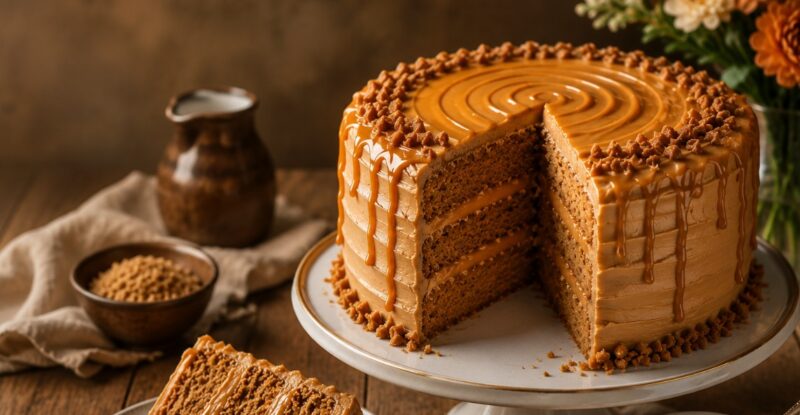
At the end of the day, a magnificent butterscotch cake is a testament to what happens when you treat basic pantry staples with a little bit of respect. With a heavy saucepan, a good bag of dark brown sugar, and a watchful eye on your oven timer, you are already ninety percent of the way to a masterpiece. Don’t let layer cakes intimidate you. Lean into the process, trust your senses, and let the rich flavor profile do the heavy lifting.
Next time a birthday, an anniversary, or a quiet Sunday afternoon rolls around, skip the bakery box. Whip up a batch of this butterscotch sauce, bake your layers, and treat your loved ones to something truly memorable. You’ve earned it!